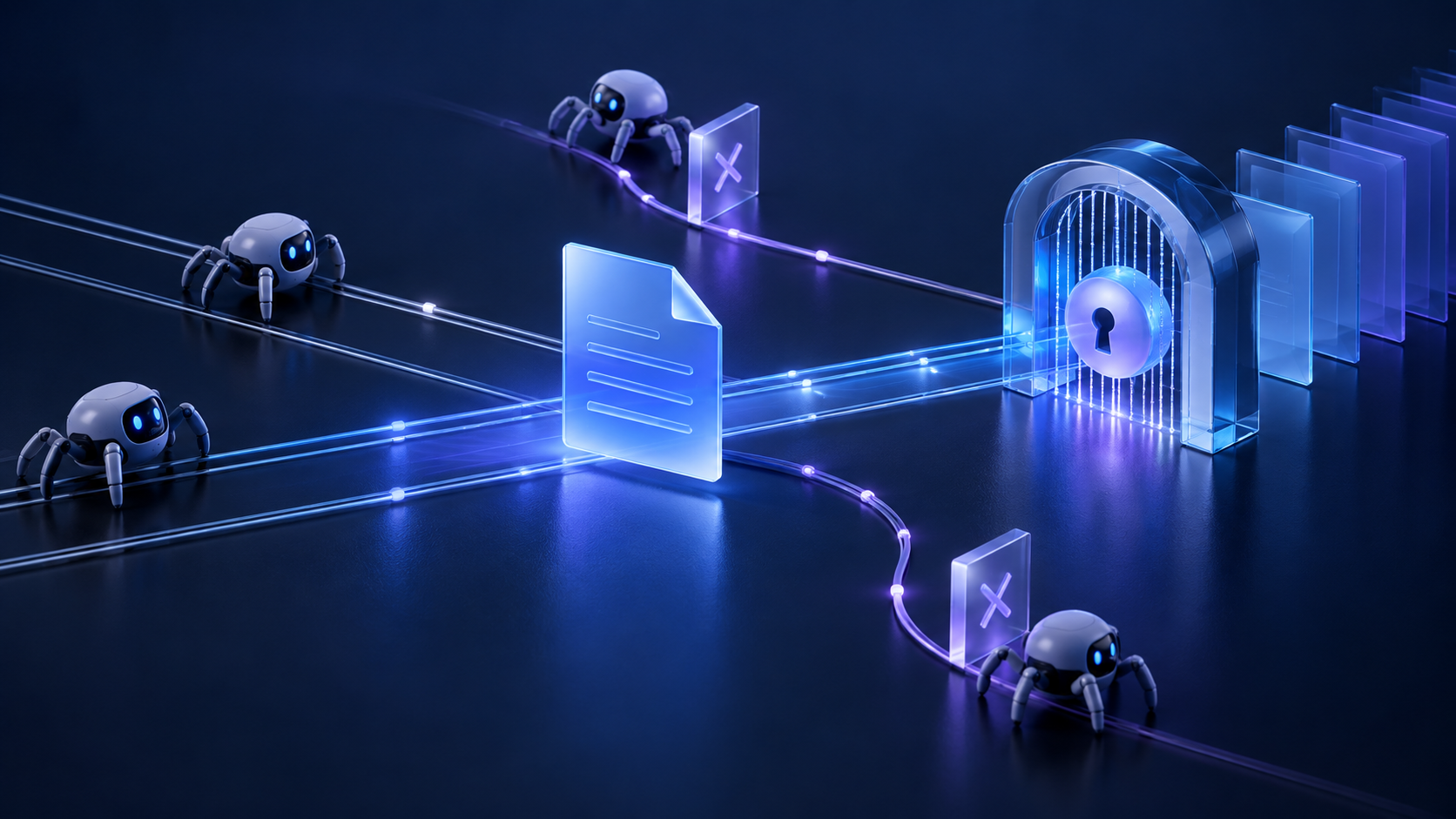
Imagine you need an answer to a question about a company’s service. First you search on Google, then you ask ChatGPT, then you contact the company’s support and wait on hold. Finally you get a vague, unqualified reply with a link to a document whose wording you still have to work through to understand what it actually means. For most of us, this scenario needs no imagination.
Search engines like Google don’t try to solve your problem — they point you to other sites. ChatGPT doesn’t know the contents of a company’s documentation or the context of the specific question you’re asking. Support agents may use internal terminology, or a staff member may not know processes well enough. Even a found document that supposedly contains the answer is often written in legal or bureaucratic language that still requires effort to interpret.
We’re launching a new technology — Dzen Chat. It turns your website content into real AI assistants that help users navigate and use your site.
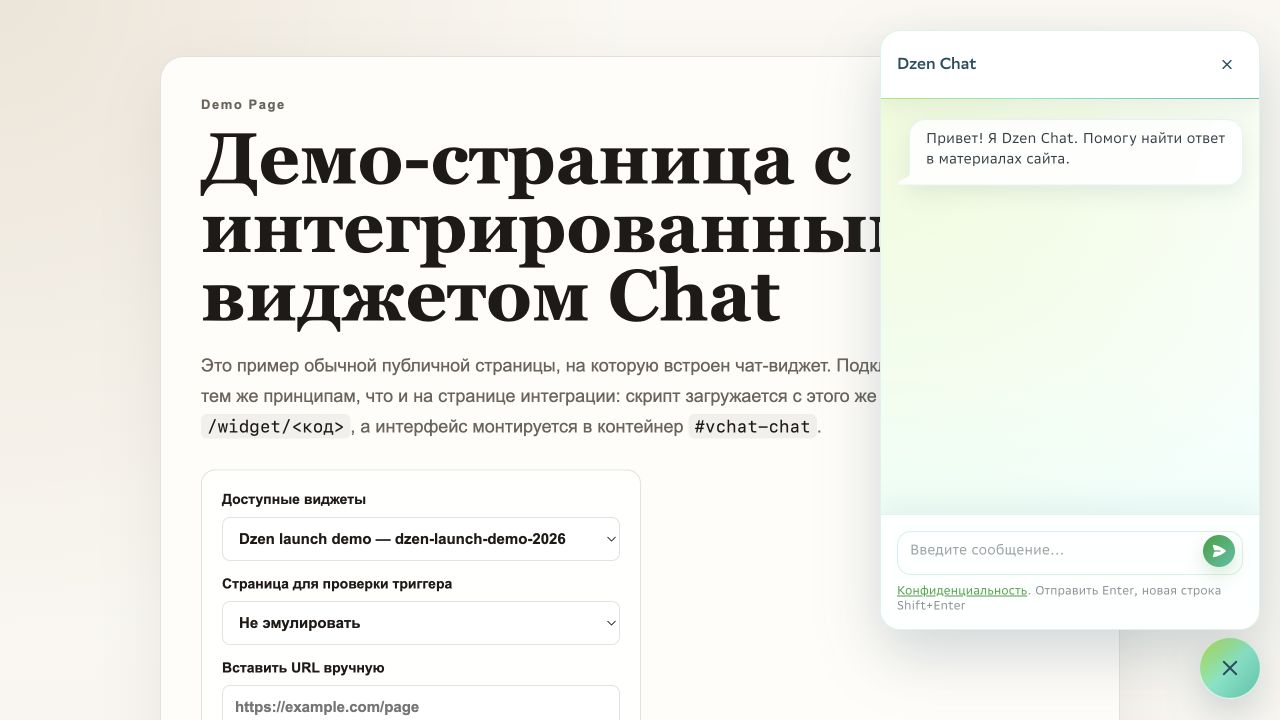
You can create a personalized bot that simplifies users’ interaction with your site and reduces the load on support departments. Indexing can include the public parts visible to users, your internal knowledge base, and any other content. The result is making knowledge accessible in a convenient form.
How Dzen Chat works under the hood
Let’s look under the hood to explain why this technology can improve users’ lives and increase their loyalty.
The first step is indexing the content of your site or knowledge base, similar to how search engines like Google or Yandex — or an on-site search solution — crawl pages. The technology extracts the meaningful parts of pages: it removes service elements such as navigation, footers, service headings, and ad blocks, and isolates unique text segments. A cleaned version of the content is used to build a comprehensive search index that employs several indexing methods.
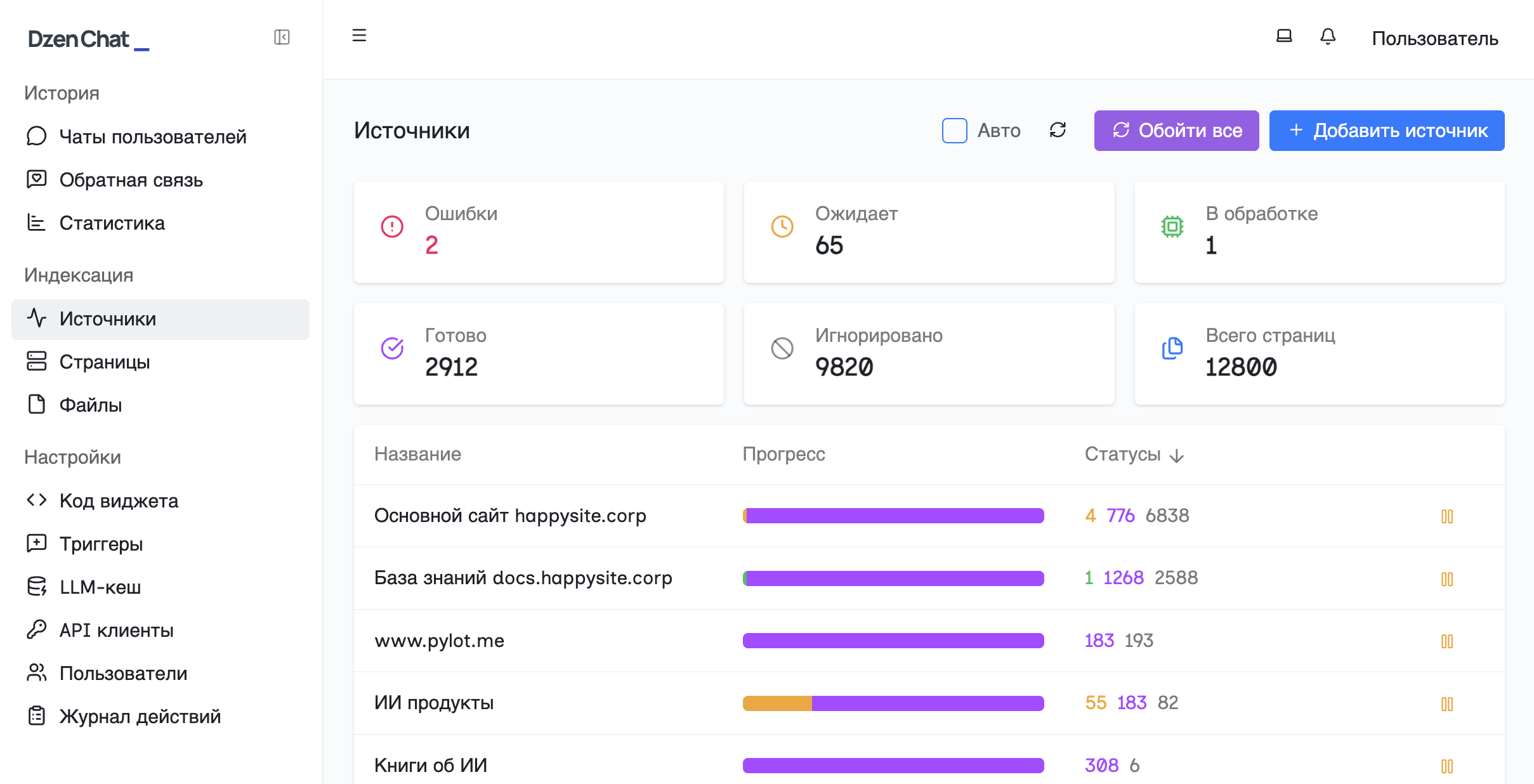
The cleaned content is used to build hybrid indexes: full-text search that weights page structure (for example, text in a heading has higher weight), vector representations of data, semantic-structure parsing, and so on.
Unlike a regular full-text search engine, a hybrid system solves more practical user tasks. For example, a user may ask, “When will my order arrive?” The relevant information may be in a “Delivery times and methods” section. Exact phrase matching may fail because the query and the article might not share obvious roots, even though their meanings align.
Inside Dzen Chat, a natural-language question is converted into a search across both textual and semantic representations of documents on your site or portal. The result is presented as a chat in a UI familiar to users.
Dzen Chat also preserves conversational context. If a user starts exploring a question and follows up with more detailed queries, the AI assistant continues the dialogue remembering what was asked earlier.
Dzen Chat uses its own indexes and formulates answers via large language models accessed through APIs. You can connect providers such as OpenAI, GigaChat, YandexGPT, and OpenAI-compatible providers like OpenRouter, Groq, Mistral AI, and Together AI. High-quality answers don’t necessarily require the newest or most expensive models, so running an AI assistant on your site doesn’t have to be costly.
An important point: the technology does not operate inside your project. It does not access your source code or internal data. It is not an agent running inside sensitive areas of your project; it’s an external product that requires only a small JavaScript snippet to be placed on your site pages. A user cannot “hack” the widget to redirect someone else’s order or reveal personal account balances.
Why Dzen Chat doesn’t make up answers
The chat doesn’t ask a language model to answer from abstract general knowledge. All answers are generated based on texts that were found and indexed in the knowledge base. A query first finds relevant pages and document fragments, and only then is an answer formed.
Each answer is accompanied by links to the sources used: page titles, links, and the relevant sections. After receiving an answer in the chat, you can immediately open the original material to verify details.
Guardrails
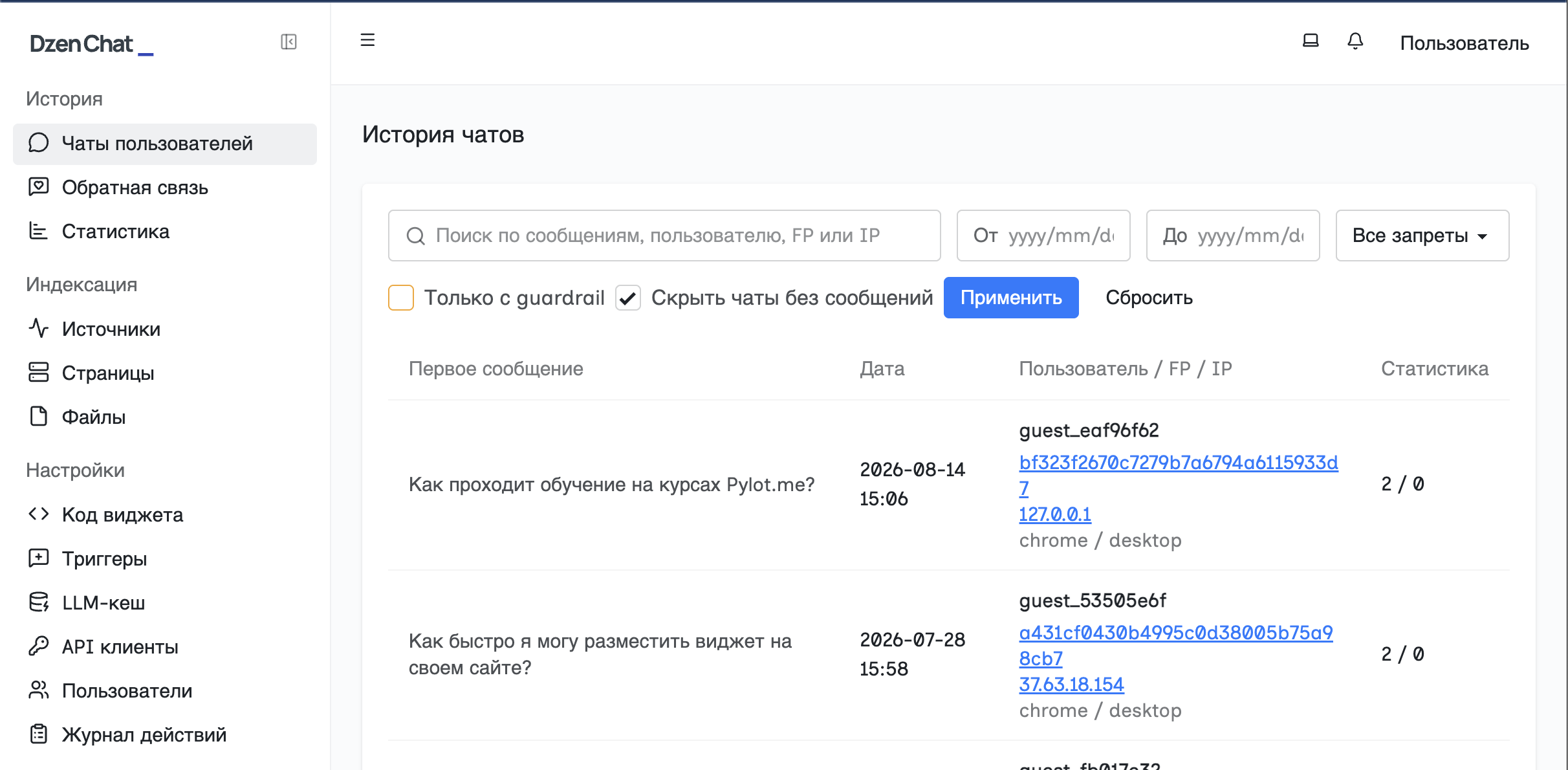
It’s hard to list every capability in one article. The technology is designed to simply work, but you may read news about a widget being made to write Python code or perform other unexpected tasks.
If you don’t want that to happen, you can configure special protection mechanisms — guardrails. This system checks the user’s request before calling the model and reviews the generated answer before it’s sent. Guardrails help prevent misuse of the chat and keep the dialogue within predefined rules.
Who is Dzen Chat for
There’s a lot of debate about whether AI helps, hinders, or creates problems. Users often dislike interacting with a bot, especially if it struggles to understand their question. It’s important to identify which sites benefit most from this technology and where it will have the greatest impact.
If your company handles mass customer service, has operators answering customer calls, has started building a knowledge base, or even just added a search form to make site content easier to find, Dzen Chat can enhance the quality of user support. Users will be able to ask questions in a convenient form and get answers grounded in facts.
Here are a few less obvious advantages.
Multilingual support
One unexpected effect we observed while operating the technology with clients is the ability to work across languages. The search index can map meaning between several languages, allowing site content to remain in one language while users ask questions in others.
For example, your site and knowledge base may be in Russian while visitors ask questions in English. Companies don’t necessarily need to maintain full-language versions of the site — this can help expand reach without forcing visitors to use a browser’s built-in translator.
Reducing call-center turnover
Another example from our experience: one client had high staff turnover on their customer service phone line. There were many requests, callers were not always polite, services were complex, and the client was a company with hundreds of thousands of subscribers. Salaries for such positions tend to be low, and training takes weeks. Dzen Chat can help such companies even as an internal tool: staff can use the assistant to find answers to customer questions more quickly and comfortably.
How to integrate it on your site
In the simplest case, getting started with Dzen Chat can take from several hours to a day, depending on the complexity of your setup. There’s a SaaS option: add your site for indexing and embed the AI widget into your site template. Users will see a chat prompt in the familiar place — bottom-right of the page.
We also offer deployment on your own server or inside a corporate perimeter. You can use your own models to generate answers (BYOK) if using public providers conflicts with your security policy. To clarify integration options and extensions, book a demo: book a demo.
This project is my personal startup; you can message me about integration possibilities, partnerships, or use cases.